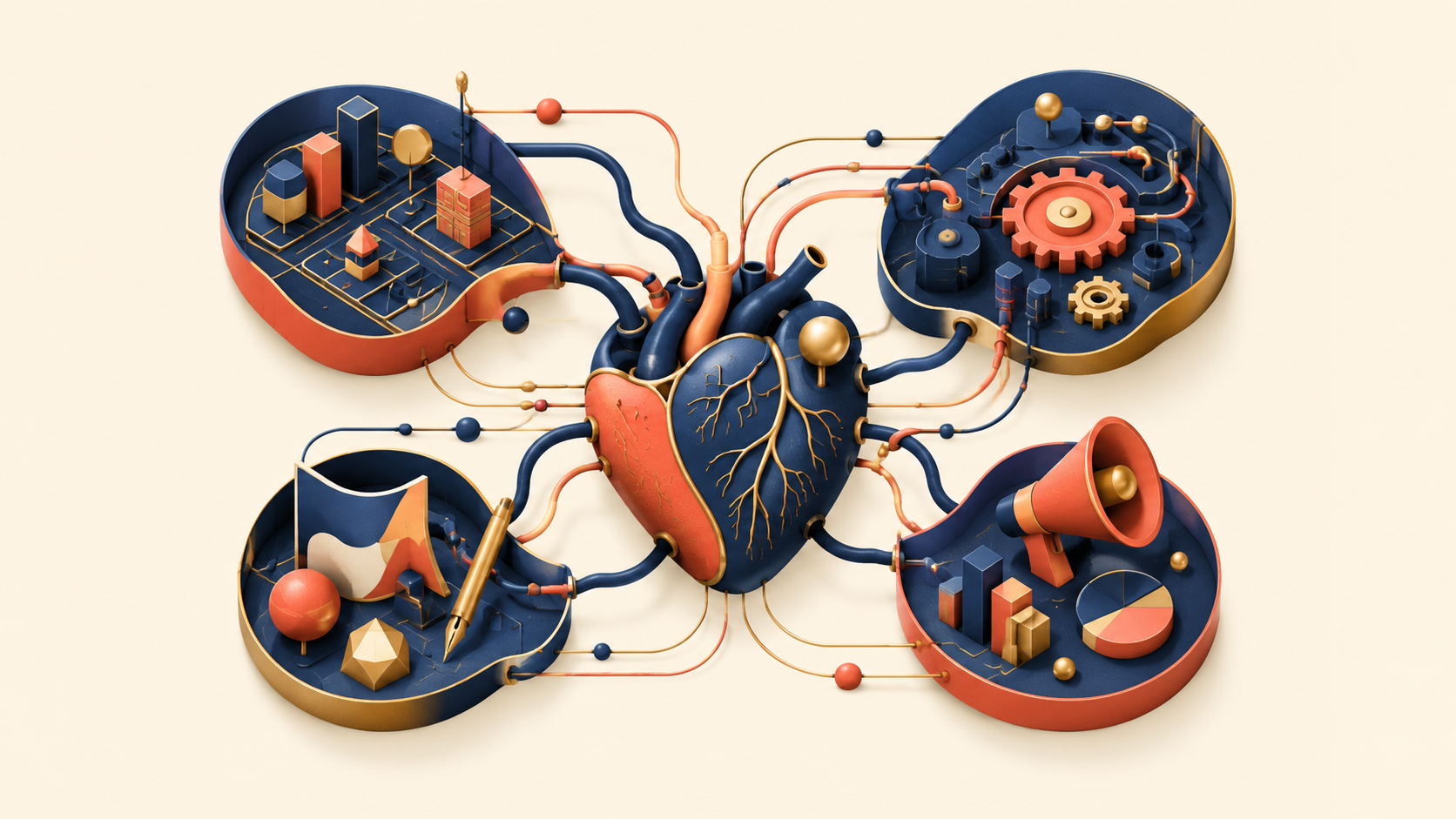
A product is not a stack of independent parts. It is a living system where every component shapes the others. When planning, design, engineering, and marketing operate as isolated departments, problems show up in the seams: unrealistic requirements, beautiful designs that miss the ship date, working code that confuses users, marketing promises the product cannot keep.
For product managers, this systems view is not a poetic metaphor. It is the working assumption behind almost every decision. Cross-functional team collaboration is what holds the organism together day to day, and a small set of minimum deliverables plus disciplined priority management are the guardrails that keep the system from drifting. These are core product manager responsibilities, and they directly determine team productivity.
Two halves matter. First, why the functions inside product management cannot work in isolation, and what healthy collaboration across them looks like. Second, the two structural supports — minimum deliverables and priority management — that make the system actually function under real-world pressure.
The Interconnected System: Why Functions Cannot Work in Isolation
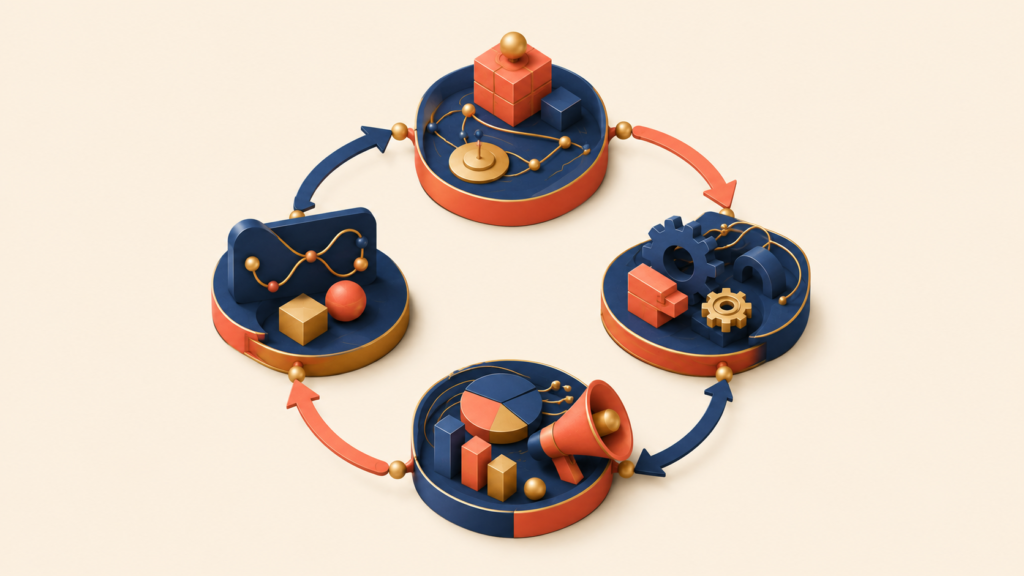
A product is not assembled from independent parts. Every element influences every other element. Once you internalize that connection, your approach to product development changes.
Planning, engineering, design, marketing, and operations form a single feedback loop. Each function offsets the limits of the others and amplifies their strengths. All of them operate inside the same context — customer needs surfaced by research — and all of them feed learning back into a better understanding of those needs.
┌──────────────────────────────────────────────┐
│   Product strategy grounded in usage context │
│   (customer needs derived from research)     │
└──────────────────┬───────────────────────────┘
                   ▼
┌────────────────────────────────────────────┐
│   1. Planning                              │
│   2. Engineering & Development             │
│   3. Product Marketing                     │
│   4. Operations / Customer Support         │ ◄──┐
└──────────────────┬─────────────────────────┘    │
                   │     ┌─────────────────┐      │
                   └────►│ Assumptions /   │──────┘
                         │ Learning        │
                         └─────────────────┘
This does not mean every person needs to do every other person’s job. It means recognizing what happens when one function works in isolation.
| When this function works alone | The typical failure |
|---|---|
| Planning without engineering input | Technically unrealistic requirements |
| Design without technical constraints | Beautiful interfaces that cannot ship on time |
| Engineering without design collaboration | Features that work but confuse users |
| Marketing without product alignment | Promises the product cannot keep |
Think of the product like a body of organs. A healthy heart cannot deliver oxygen if the lungs fail, and the blood cannot stay clean without a liver. Planning, design, engineering, and marketing depend on each other the same way. No single organ being excellent is enough — the body has to function as a whole.
Cross-Functional Collaboration in Practice
In teams that work well, each function participates across the entire process, not only at the formal handoff points.
Concretely, that looks like:
- Discussing user behavior with designers during the planning phase so the UX foundation is solid before any pixels are drawn
- Adjusting plans and designs naturally when an unexpected technical risk surfaces during development
- Getting marketing involved early enough to understand the product’s actual capabilities and set accurate expectations
- Surfacing operational constraints that affect what is realistic to build and support
Productive cross-functional team collaboration requires two things at once: enough depth in your own lane, and enough awareness of adjacent lanes to communicate effectively across them. In practice, many people struggle to fully cover even their own lane, which is exactly why minimum deliverables and clear process matter so much. The structure compensates for the gaps that pure conversation cannot fill.
Consider a football team. A striker does not just need to score. The striker has to read the midfielder’s passing timing and the defender’s positioning. Each position keeps its expertise, but the game flows when positions stay in sync with each other.
Minimum Deliverables: The Guardrails of Imperfect Communication
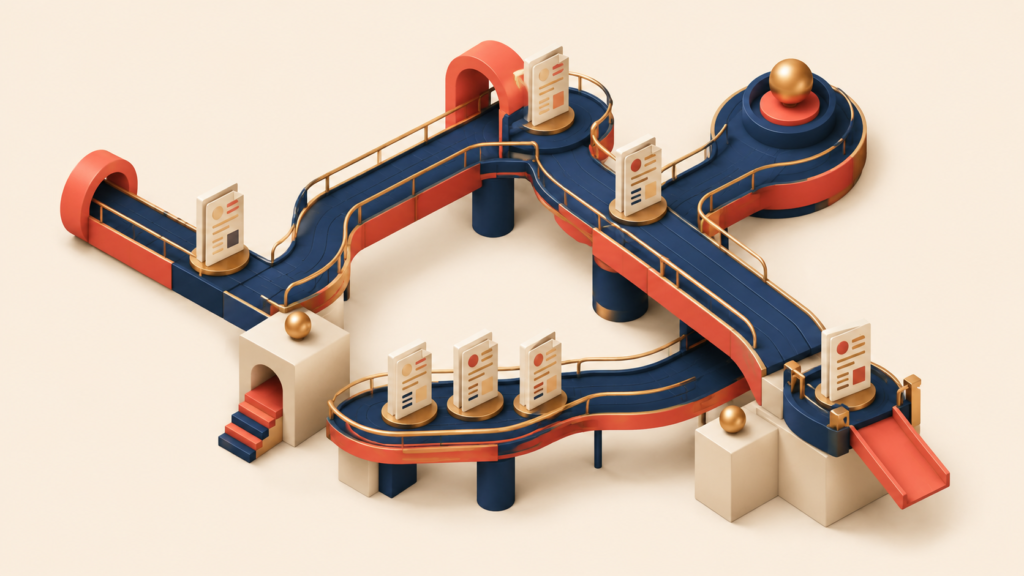
When collaboration relies entirely on verbal communication and memory, things fall through. Deliverables are the guardrails that let a team keep working together despite incomplete knowledge and imperfect communication.
A short list of core deliverables by function:
| Function | Core deliverables |
|---|---|
| Planning | PRD, detailed specifications, low-fidelity wireframes, release documentation |
| Design | High-fidelity wireframes, interaction definitions |
| Engineering | Working code, comments, and documentation |
The exact format and level of detail should match the organization’s needs. What matters is whether each function produces an output that enables the next function to do its work effectively.
When something goes wrong, product development conversations slide easily into blame and frustration. Clear deliverables reduce that risk. They make it easier to identify what was missing, fix it quickly, and prevent the same gap from happening again. The goal is not to assign fault. The goal is fast recovery and continuous improvement.
Deliverables work like a recipe. An experienced chef can cook without one. But when several people prepare a multi-course meal together, written recipes are what keep the ingredients consistent and the quality even. Deliverables play the same role in team collaboration — they are the recipe the team cooks from when more than one person is in the kitchen.
Priority Management: Triage for Competing Demands
Product teams face a constant flow of competing demands. New requests keep arriving, everything looks urgent, and resources rarely match expectations.
This is exactly why priority management matters. Someone has to evaluate each demand and decide. Four questions cover most cases:
- Is this actually urgent, or does it just feel urgent?
- Does it align with the business goal?
- How much effort will it take?
- Can it be resolved quickly with minimal intervention?
Effective priority management minimizes chaos and lets the team focus on what really matters. Without it, two failure modes dominate. The team tries to do everything and slides into shallow work and burnout. Or the team reacts to whoever is loudest in the room, and strategic coherence quietly disappears.
Priority management works like emergency room triage. When patients arrive at the ER simultaneously, the medical staff cannot treat all of them at once. They assess the urgency of each case and order them — life-threatening conditions first, minor injuries later. A product team works the same way. Every request cannot be handled at the same time, so the team has to concentrate first on what creates the biggest impact for the business and the customer.
Conclusion
Treating the product as an organism is not a soft framing. It is a working model that changes day-to-day decisions. The functions that build a product — planning, engineering, design, marketing, operations — feed each other in both directions. Cross-functional team collaboration is the practice that keeps that feedback alive. Minimum deliverables and disciplined priority management are the connective tissue that lets imperfect humans operate inside that system without losing coherence.
The next article in this series turns to the principles of productive communication that make this organism actually function in everyday work: recognizing recurring problems as signals, preparing before meetings, separating surface symptoms from root causes, and treating time as a resource.
Leave a Reply